
• Link to Instagram
  • Link to Facebook
  • Link to LinkedIn
  • Link to Pinterest
  • Service and Parts
Sales 844.880.3636 | Service 800.566.9953
ASI Dental
  • About
    • About
    • Careers with ASI
    • ASI Difference
  • Reviews
    • Customer Reviews
  • Products
    • ASI Products
  • Design
    • Architectural Office Plan
    • Architects and Designers
    • Office Planning Guide
    • Gallery
    • ASI Color Selection Guide
  • FAQs/Education
    • FAQs
    • Residency Programs
    • ASI Dental Articles
    • Equipment Tips
  • Purchase
    • How to Buy
    • Financing
    • Government Purchasing
    • Order Terms & Conditions
    • Warranty
    • Showroom Specials
  • Service/Parts
    • Support
  • Contact Us
    • Sales
    • Feedback
    • Careers
  • Click to open the search input field Click to open the search input field Search
  • Menu Menu

Tips for Selecting the Best Self-Contained Mobile Dental Delivery Unit for In-Office Use

June 12, 2019/in Articles/by ASIDesign

Updated on 12/14/20, 2/7/24 

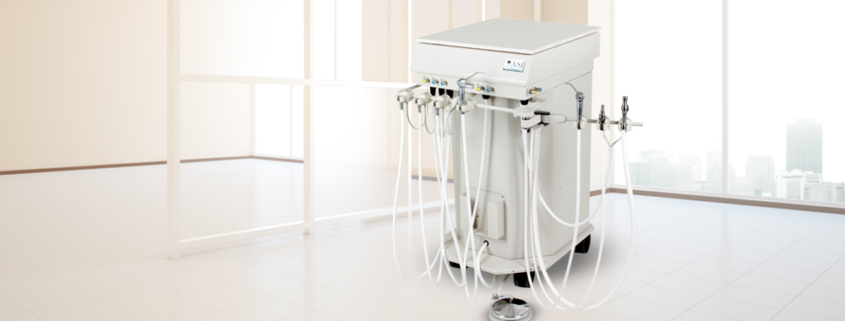
Choosing the right mobile dental unit that aligns with your specific requirements and budget can seem daunting, whether it is for in-office use or for taking out of the office for portable dentistry. Prices of self-contained dental units can vary widely, and the quality and features of these units may contribute to the price differences. When considering purchasing a portable dental unit, it is essential to carefully evaluate numerous factors to ensure that you are getting a reliable and functional product. The purpose of this article is to help you make a well-informed decision, explain essential mechanical features of mobile dental equipment, and outline what to look for when comparing/reviewing different models for your office.


Use these tips to look for these specific features when evaluating a portable dental unit:

Tip #1 – Evaluate for Minimal Vibration
One of the most overlooked but significant characteristics of evaluating a mobile dental unit is vibration. An ideal system will have a powerful compressor and vacuum system, meaning the motors could generate enough shaking to cause sound and make the work surface unusable if the instruments and trays vibrate excessively. A well-designed unit will ensure that the vibration is minimal to allow dental procedures and working from trays without interruption.

Tip #2 Insist on High Grade Portable Dental Compressor and Vacuum Pumps
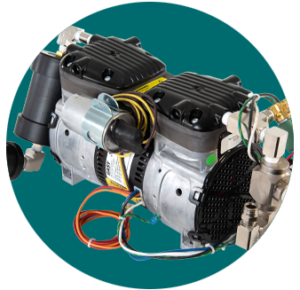
Greater precision comes with higher quality pumps. The dynamic balancing of the motors and piston will make them run smoother. This smoother operation is the key to beginning with proper construction to eliminate vibration at its source. Higher grade also means that pumps are built to last ten years of use or more and provide a clean oil-less air supply for dental treatment.

Tip #3 Engineered Isolation Mounts Make a Big Difference
The best way to mount pumps requires not only a stable and secure connection to keep the pumps from moving around but also the need to eliminate transfer of vibration from the pumps to the chassis. Rubber mounts do a fine job of securing the pump but don’t do very well at absorbing vibration. Improved dynamic mounting is of higher quality and eliminates a high percentage of vibration.


Tip #4 Ensure Solid and Robust Construction Materials Are Used
Mobile dental equipment that has poor construction or uses flimsy materials will not handle vibration well and will cause problems. A well-built portable dental unit will be not only constructed of high-grade components but will also have thicker walls and materials. Units should use aluminum or an equivalent type of construction to keep them lighter yet stronger. To properly absorb vibration, be cautious of dental units that are too small or lightweight.

Tip #5 Verify Sound Performance with Your Own Ears
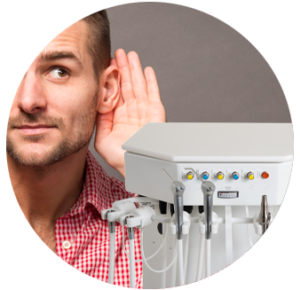
Well known options in the dental field are the inexpensive, poorly designed, and loud portable dental units A well-engineered self-contained dental unit should be quiet and operate under 48 decibels measured right next to the system. However, sound can be elusive, and decibels do not always truly represent sound. There is no standardized testing certification used to compare brands to the sound levels they claim. So, the best way to find out the sound of the system would be to hear it in person. If that is not practical, then either listen to a video of the operating system or get a recommendation from someone you trust that has heard the systems.

Tip #6 Determine if Suction Performance is Powerful
One of the most challenging design areas for a mobile dental unit is to create the powerful suction desired for dental procedures. It needs to provide high flow with moderate strength to pick up debris, effectively capture water coolant, and pull viscous solutions through smaller tubings like the saliva ejector or surgical tips. To adequately perform dental restorative procedures, the system should be able to power the high-volume suction and be able to extract liquid through the saliva ejector simultaneously. When comparing portable dental units with compressors, evaluate the suction strength of both the high volume and saliva ejector handpieces when used together so that you know if you have a well-designed portable dental suction system. A dedicated vacuum built into the unit for strong suction capability or even high-flow vacuum options are, in many cases, an ideal solution.


Tip #7 Verify Adequate Suction Canister Size
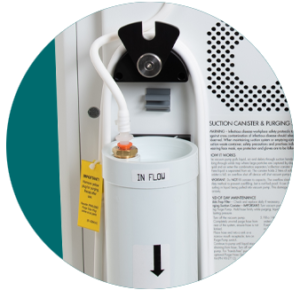
The size of the suction canister should allow for a standard day of dental procedures with regular oral rinsing during treatment. A general baseline is that the canister should hold around two liters of liquid. The canister should prevent overflowing by shutting off the vacuum when full and should have an indicator light to let staff know to empty the system.

Tip #8 Consider Suction Canister Purging Ability
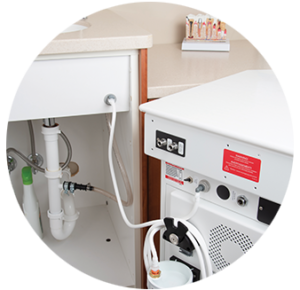
Consider a hands-free solution to emptying the contents of the suction canister through a pump and discharge hose system. Use a purge system to discharge directly into a sink basin or a convenient quick disconnect connected to the plumbing drain system. Once emptied, readily rinse the system by evacuating clean water and then clean overnight by suctioning an enzymatic cleaner that breaks down the proteins in blood and saliva.

Tip #9 Check for Adequate Compressed Air and Handpiece Performance
When evaluating a portable dental unit with a built-in air compressor, make sure that it can produce enough airflow at the right pressure to operate air-driven dental turbine handpieces properly. Don’t be tricked into using horsepower to try and compare models. Unfortunately, horsepower ratings have a wide range of latitude, and marketing companies have used the HP rating to trick many consumers into believing one model has more power than another. Find out if the system you are evaluating can adequately run common brands of dental turbine handpieces for an extended period without pressure dropping.


Tip #10 Make Sure Aesthetics are Professional and It is Easy to Work with the System
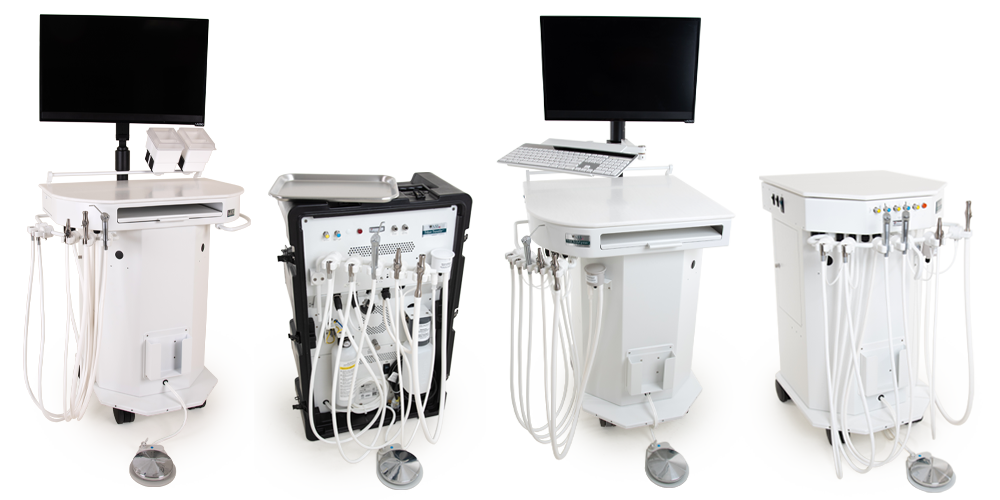
It is necessary for the system you will be using to look like a professional piece of dental equipment that delivers high-quality care since it is in an office setting. Look for systems that have enclosures made of quality materials and finished in a way that looks modern with rounded corners and edges. Work surfaces should provide an adequate working area and provide an easy to clean, attractive appearance. As a mobile dental cart, it should roll easily with high-grade casters. Other considerations are ensuring that the dental unit has cling free dental handpiece tubing that is not stiff and that handpiece holders should be modern, rounded, and easy to clean.

Tip #11 Uses Standard Electrical Outlets
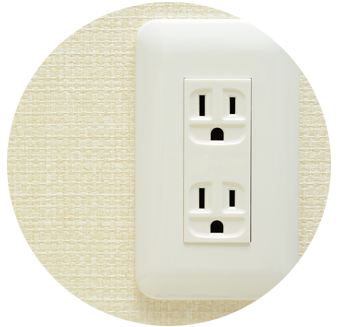
A well-designed self-contained dental unit should be able to operate from a standard electrical outlet without overloading the circuit even with both pumps running at the same time.

Tip #12 Has Required Safety Testing Lab Approval
Ensure that the model you select has a UL certification by an approved testing lab. Knowing that all the electrical components, wiring, switches are high quality assembled correctly will give you peace of mind and ensure your office meets building code requirements.


Tip #13 Includes Adequate Dental Water Supply and Water Line Disinfection
Current requirements are mandating the disinfection of the water lines in a dental unit to remove the biofilm that can grow inside the small diameter tubings. Tablets and other chemicals can clog or damage mobile dental equipment components and require consistent management to ensure the removal of biofilm. An ideal self-contained dental unit should have a water line disinfection cartridge that can be part of the bottle system so that no daily maintenance is required. Since these cartridges can be expensive, select a system with a tandem water supply that gives ample water supply for a full day of dental procedures but only requires one cartridge to filter both bottles.

Tip #14 Has Amalgam Separation Option
If you are using the portable dental unit for restorative procedures such as removing old amalgam fillings, the suction system will need the ability to use an amalgam separator. The unit can purge through the amalgam separator to collect the heavy metals. The amalgam separator must receive testing and approval by a certifying agency to meet state and EPA regulations. Verify that the model you use provides a certified separator option.

Tip #15 Can Handle Nitrous Oxide Scavenging
In-office use of a self-contained dental unit will often require the ability to use the portable dental suction to connect to the nitrous patient mask to scavenge off the excess gas. Check to ensure that the portable dental system has the optional capability to be used for nitrous exhaust scavenging.

Please visit our Portable Performance Page on ASI Dental’s line of advanced mobile dental delivery system technology to evaluate the features a well-built system can have. For a complete selection of portable dental equipment, go to ASIDental/products/portable.

Click Here for More Information

Copyright 2020 and 2024 All Rights Reserved.  ASI Medical, Inc. DBA ASI Dental Specialties  |  Terms & Conditions of Use
 

Download Article Here

How to Plan Your Dental Treatment Room Setups and Office Build-Out

June 6, 2019/in Articles/by ASIDesign

Cost control is an important criteria for new dentists setting up their first practice.   To keep budgets from spiraling out of control, dentists can now select new types of modular dental equipment that are more cost efficient than traditional fixed dental cabinets.  Plus this type of equipment easily allows them to scale their equipment budget to the growth phase of their dental practice.  This can allow dentists to defer purchasing all the equipment when they first open.

The first step is to plan well and to only purchase the dental delivery systems, chairs, equipment and supplies you can put into production right away. This may mean avoiding supply stocking programs and the temptation to fully equip the entire office unless you really believe all the dental treatment room setups will be used from the start.

Planning out your office and expenditures is more than just getting the right look. Use discernment when reviewing pre-formatted budget templates, and consider the importance of each area to generating initial practice revenue. Before you purchase equipment, ask yourself if extra equipment is really necessary for you to open your practice. This will help you get down to a much more realistic overall budget that isn’t filled with excess equipment, supplies or post construction décor.

Select types of modular dental equipment that easily adapt and be added in as practice growth requires it.

Think like a large manufacturer that is planning to grow. These companies need to be able to easily ramp up their production lines in the future, but don’t want to over spend until their sales numbers justify the expansion. So while they would consider finding a large enough facility that allowed for planned growth, pre-wiring it and completing some of the interior finish, they would not buy additional production line equipment until it was required.

The trick is to ensure construction is completed and readily allows for modular dental equipment to be moved in, set up and easily connected. There are now handy in-wall and floor dental junction boxes that facilitate running electrical wiring, IT cabling and plumbing. These built-in boxes come neatly enclosed and don’t detract from an empty treatment room’s appearance, yet they make it very easy to connect equipment as needed.

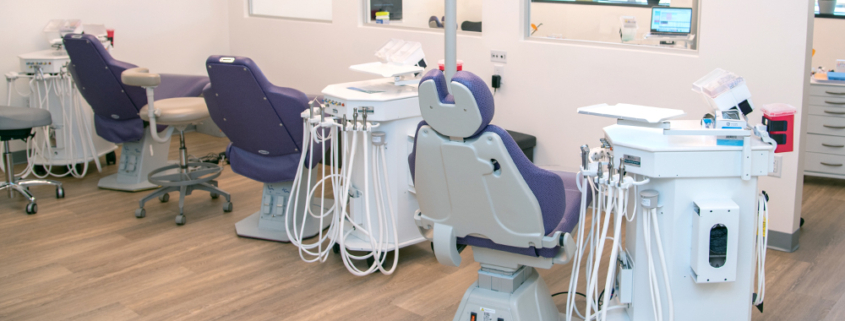
To maximize your dental office space cost, it is important to get the most from your space. Building leases are based on a price per square foot, which is the horizontal dimension. Keep in mind you pay nothing more for the vertical space. Large dental cabinets require a big horizontal footprint without adding to treatment capability. Modern dental delivery carts are more compact and can integrate instruments, computer systems and monitors into one console, reducing the footprint and taking advantage of the vertical space. You can design smaller treatment rooms yet achieve an open and spacious feeling for you and your patients.

Modern modular dental delivery systems and mobile dental carts are much easier to set into place and connect without a lot of installation difficulty. This type of dental equipment easily adapts to expansion and even different operators’ requirements, including ambidextrous or multi-specialty needs.

No matter what equipment you invest in as you start your practice, don’t feel like you have to buy it all at once. Take a phased approach instead.


Download Article Here


Modular Dental Office

November 6, 2017/in Articles/by ASIDesign

Dr. Massad discusses his Modular Dental Office with ASI’s Cabinet-Free operatory design.

Read more

Dual Ultrasonics – Dr. Thomas McClammy

August 15, 2017/in Articles/by ASIDesign

The purpose of this article is to emphasize that ultrasonics that are readily available and ergonomically delivered can be a valuable adjunct to endodontic procedures for the well trained and astute endodontic clinician specialists and generalists alike.

Read more

ASI for Your Dental Equipment Needs

February 10, 2016/in Articles/by ASIDesign

Six Significant Reasons to Select ASI for Your Dental Equipment Needs.

There are many choices of dental equipment manufacturers. However, ASI Medical, Inc. provides many unique capabilities and features that separate our dental equipment line from the others. Listed below are six significant reasons to evaluate when selecting dental delivery units and systems for your office.


1. Improve Treatment Times – ASI’s Unique Advanced Dental Systems® are a unique type of dental delivery system that can improve efficiency and reduce treatment time. Having the right dental instrument readily available can eliminate wasted time reaching for instruments by the dental team throughout the entire day. Just as process improvements help manufactures reduce production time, having properly placed instrumentation can improve dental treatment times.
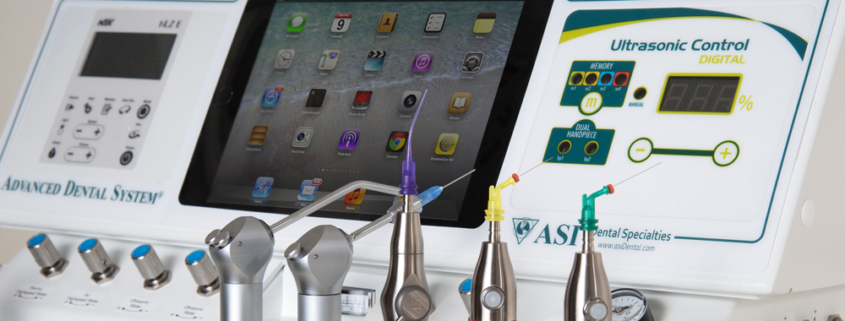
2. Custom Configurable with Everything in One Dental System – ASI’s Advanced Dental Systems utilize a unique modular instrument panel that operates from only one foot control, allowing each dental system to be custom configured. Select your desired instrumentation, determine which control panel each of the instruments will be integrated and on which location on the holder bar in the order the dental practice wants. This allows the dental delivery system to specifically meet the practice recruitment needs through the ability to perform procedures from endodontics to periodontics with only one dental unit.
3. Ambidextrous and Ergonomic – ASI’s dental operatory equipment can be fully ambidextrous allowing for ease of positioning within a well-designed operatory space. Dental cart designs allow for infinite positioning without movement constraints or reach limits of arm based dental units. Having easily accessible instruments positioned correctly for the staff improves not only their efficiency but enjoyment of their daily work.
4. Robust Designs for Lasting Quality – For over twenty years, ASI been making high quality dental equipment constructed of thick walled aluminum, stainless steel control valves and titanium instruments. Our dental equipment stands the rigors of daily institutional use. Durability is partly why ASI mobile dental systems were selected as the deployable dental system for all branches of the military. It is also why our specialized Advanced Dental and Endodontic Systems are used in over 60% of dental teaching schools.
5. Made in America and Selling Direct to our Customers – ASI manufactures a complete line of dental delivery systems in the U.S. Advanced manufacturing techniques are utilized in our machining centers and chassis fabrication. We sell our products to dentists and institutional buyers to save on distribution mark ups. This allows us to tailor configured dental unit models in the price points needed by our customers.
6. Comprehensive Tech Support – ASI provides support to your staff and for the products in a comprehensive fashion. This includes videos on use and maintenance that can be readily accessed by new dental staff at any time for their orientation and training. Over the past twenty years, we have developed a network of independent dental service technicians to facilitate on site installation and repairs of our dental equipment. Additionally, our tech support staff is a phone call away if your own service or dental team has questions for use or troubleshooting of your dental equipment.

Self-Contained Dental Unit Question – To Plumb or Not To Plumb

December 7, 2015/in Articles/by ASIDesign

Is a Self-Contained All-In-One Mobile Dental Delivery Unit Right for You?

Changes in dental delivery models that include corporate on-site dentistry, tele-dentistry and portable dentistry are natural applications for portable dental units.  However a growing trend is to utilize these types of units for establishing new dental offices and easily expanding an existing one.  Reasons range from reducing build out costs, more quickly moving into a space to begin generating patient revenue, flexibility in dental treatment room design or simply to avoid making long term building lease commitments.  These are just some of the reasons why more clinicians are interested in ASI’s Portable Self-Contained Dental Units.  See our Customer Reviews for their input on their applications.

Have you thought about self-contained all-in-one dental cart as a possible option for your practice versus doing traditional dental plumbing to a utility room? The following information will help you determine if a self-contained mobile dental unit is right for you.


Advantages of ASI’s Self-Contained Dental Cart Systems:

  • Ease of relocation
    ASI’s portable self-contained dental carts can be easily moved to a different location. An all in one dental unit is the perfect way to test your location with minimal construction or financial obligation.
  • Reduced startup cost
    ASI’s self-contained dental units eliminates the expense associated with plumbing a building. All that is required to be fully operational is a standard electrical outlet.
  • Immediate startup
    ASI’s mobile dental delivery carts allows you to open without waiting for additional permits and building inspections. If you are setting up a satellite office or working out of a specialty office on the side, ASI’s integrated portable dental delivery units gives you the flexibility to practice anywhere without the hassle of assembling and disassembling your instruments for transport.
  • Painless lease negotiation
    Mobile self-contained dental systems may allow you to negotiate more favorable lease terms. This is because there is no need to compromise the building structure for plumbing renovations.
  • Connect to central plumbing
    The internal air compressor and vacuum in a self-contained ASI cart can be bypassed and allow the unit to be connected to central plumbing at any time. This makes it a very versatile system able to adapt to changing needs.


Considerations of  Self-Contained Dental Cart Systems:

  • Required maintenance and use
    ASI’s Self-Contained systems include an internal air compressor, vacuum, purge and closed water systems. These systems are designed to be easy to operate and generally do not require action from you. A basic understanding of how they operate goes a long way in maximizing their use.   Daily maintenance can usually be performed in ten minutes or less and as with a utility room, they require periodic maintenance to provide optimum performance.
  • Sound
    ASI’s self-contained systems are remarkably quiet. The air compressor and vacuum system do make some sound while operating and make a humming while operating.  Many of our customers find them remarkably quiet and the low resonating tone adds some white noise to the treatment room.  Listen to the sound level under our How it Works Tab.  Also see related article Tips for Selecting the Best Portable Dental Unit for In-Office Use.


Please visit Click Here for more information on ASI’s line of mobile dental delivery systems.


Download Article Here
Page 2 of 212

Archives

  • September 2026 (1)
  • June 2025 (1)
  • September 2024 (1)
  • April 2021 (1)
  • February 2021 (1)
  • July 2020 (1)
  • June 2020 (2)
  • April 2020 (1)
  • December 2019 (1)
  • June 2019 (2)
  • November 2017 (1)
  • August 2017 (1)
  • February 2016 (1)
  • December 2015 (1)
Copyright © 2026 ASI Dental. All rights reserved.
  • Link to Instagram
  • Link to Facebook
  • Link to LinkedIn
  • Link to Pinterest
  • Contact Us
  • Privacy Policy
  • Order Terms
  • Website Terms
  • FAQ
Scroll to top Scroll to top Scroll to top